


What are Age-Related Cataracts?
Case study:
Patient X presented with complaints of blurry vision and increased sensitivity to glare from artificial lights, such as computer screens and headlights. Although not yet due for a sight test/ eye examination, Patient X expressed concern over changes in their vision, prompting an earlier appointment.
Appointment with the Optometrist:
During the appointment with the Optometrist, Patient X reported difficulty seeing the television and reading in bed, necessitating the use of the main light. The Optometrist conducted a visual acuity test to assess the patient’s ability to see at different distances. Following a thorough Eye Examination, it was determined that Patient X had started to develop cataracts and required a stronger prescription for their glasses.
Understanding Age-Related Cataracts:
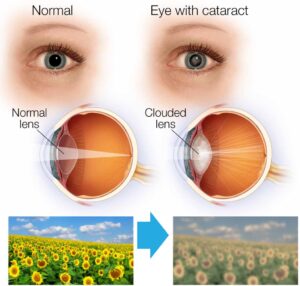
Age-related cataracts occur when the lens inside the eye begins to age, resulting in the formation of cloudy patches. These patches progressively enlarge, leading to blurry and misty vision, and in severe cases, blindness. While typically associated with older adults, cataracts can also affect younger individuals, impacting daily activities such as driving.
Next Steps:
Upon the Optometrist’s recommendation, Patient X consulted with one of our Dispensing Opticians (DO). The DO suggested a pair of reading glasses with the new prescription to facilitate reading in bed. Additionally, they recommended investing in a better side lamp to illuminate specific reading materials without disturbing the sleeping partner. For driving in low-light conditions, the DO proposed a pair of Distance glasses with Hoya EnRoute technology, which enhances contrast, colour perception, and reduces glare.
Collection Appointment:
After a few days, Patient X’s glasses arrived and underwent thorough inspection before their scheduled fitting appointment with the DO. Patient X expressed satisfaction with the clarity of vision provided by the distance pair and noted reduced glare compared to their previous uncoated glasses. They also reported improved reading experience. The DO advised trying the glasses at home, especially with the new bedside lamp, to evaluate their effectiveness under various lighting conditions.
Understanding the Risk Factors for Age-Related Cataracts:
While the exact cause of age-related cataracts remains unclear, several factors may increase the risk, including a family history of cataracts, smoking, diabetes, eye injury, long-term steroid use, radiotherapy, chemotherapy and excessive alcohol consumption.
Cataract Surgery:
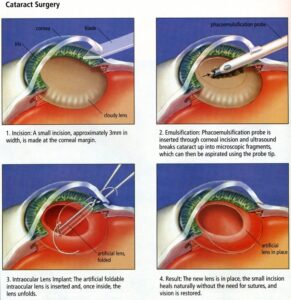
Cataract surgery involves replacing the cloudy lens with an artificial lens implant. Recovery from the surgery may take up to six weeks. Depending on the type of lens implant, patients may require reading glasses or glasses for long distances or both. It’s important to note that not all individuals with cataracts require surgery, and decisions should be based on the impact of vision loss on daily activities.